The Mysterious Death at Babiš's Poultry. Why Did Suzana Zdravková Die?
A year ago, a young Bulgarian cleaner died at Vodňanská drůbež, part of the holding built by prime minister Andrej Babiš. The company dismissed the tragedy as an unfortunate accident, but Voxpot’s investigation suggests a more troubling reality — and exposes the conditions facing foreign workers in the Czech Republic.
.jpg)
Modřická provozovna Vodňanské drůbeže, kde došlo k tragické události | Koláž: Voxpot
Nineteen-year-old cleaner Suzana Zdravkova arrived at work earlier than usual on the morning of 17 May last year. It was a Saturday, not yet half past four, and the sun was still waiting below the horizon.
Even so, the young Bulgarian woman set to work, washing windows in the dim early light.
At the poultry plant in Modřice, run by Vodňanská drůbež—part of the Agrofert conglomerate owned by the Czech prime minister Andrej Babis—staff were preparing for a commission visit scheduled for Monday. The weekend was meant for a thorough, top-to-bottom clean. For Suzana, who had been working there for nine months, it would be the last shift of her life.
At dawn, she fell from the window and died.
She left behind a family, including a three-year-old child.
Authorities closed the case as an accident, concluding that the cleaner had, on her own and before her shift began, taken on work she was not even authorised to do. But a closer look tells a more troubling story—one that points to the conditions under which the Czech Republic is becoming an increasingly dangerous place for foreign workers who come here in search of a livelihood.
A Mysterious Fall
Window washing was not part of the planned deep clean. But at 4:27 a.m., Suzana pulled a chair up to the window and, without any safety harness, climbed onto the inner sill on the second floor.
Ten minutes later, according to security camera footage, she lost her balance and fell backward six and a half metres onto the concrete surface below. All that remained on the sill was a wet orange rag.
The first worker from the poultry plant reached her a few minutes after the fall; paramedics arrived shortly afterwards. Suzana Zdravková, however, succumbed to her injuries.
“On Saturday mornings, nobody works,” several workers say as they head into the plant for their shift, explaining why the tragedy had no direct witnesses. But almost everyone reporters of Voxpot spoke to remembered the young woman.
Suzana Zdravková came to the Czech Republic from a small Roma settlement near the Bulgarian village of Veličkovo, in the country’s east. She was not employed directly by the poultry plant, but by the staffing agency Intervacantion, which supplied workers to Vodňanská drůbež.
She came from a deeply poor region. “According to our research, she was from a village near Varna, where much of the Roma population lives clustered in a single unofficial settlement, with most residents formally registered at just one address,” says local reporter Svetoslav Todorov, who covers labour exploitation for the Balkan Investigative Reporting Network. “People from poor Roma and Turkish communities are often pushed into exploitative work, and there is very little resistance from within those communities, or any meaningful institutional response.”
Poverty drives many people from the area to seek work in wealthier European countries. Todorov says recruitment is often informal, usually happening through social media and personal intermediaries.
“On Facebook, they’ll simply write: We’re going to work, we have two free seats in the car, join us, we’re leaving tomorrow,” he says.
People who worked with the agency say Intervacantion operated in much the same way, finding new workers through friends and acquaintances. That account was also confirmed to Voxpot by a former Ukrainian employee of the agency, who asked to remain anonymous and is referred to in the text as Oxana.
Voxpot reporters spoke with her by phone while a man who introduced himself as a relative of the deceased woman stood nearby. The conversation took place in the middle of an industrial yard where he lives. He reportedly works in poultry as well, though he did not speak Czech or English to confirm it.
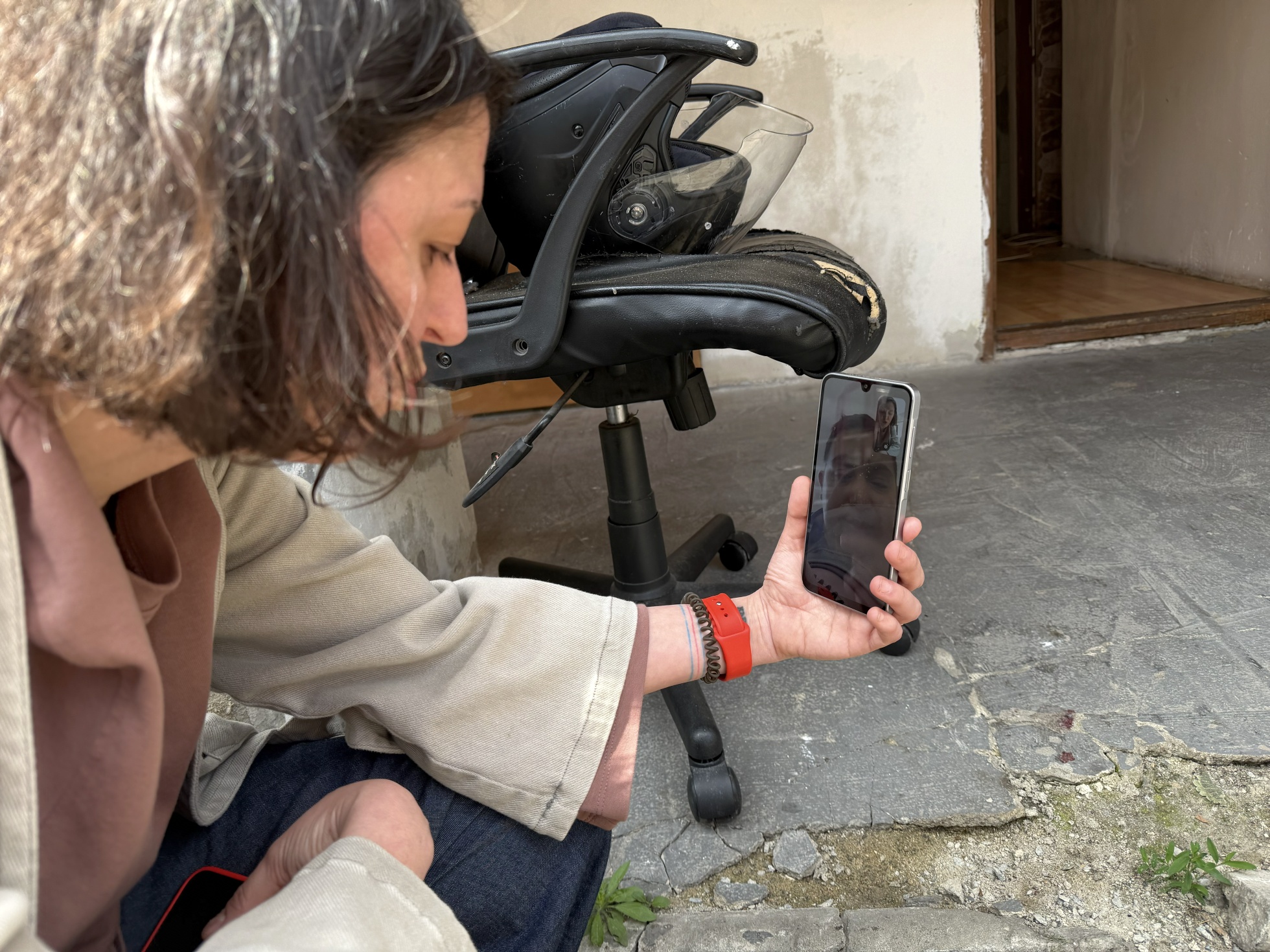
Phone call with workforce coordinator Nevzat | Photo: Voxpot
According to Oxana, no one complained about the work. “They get free accommodation and insurance, so they have nothing to complain about,” she says. Suzana was supposed to have the same arrangement, and Oxana remembers her as a hardworking, sensible young woman.
“Her death definitely had nothing to do with her being young,” she says.
If work came easily to Suzana, her personal life was more difficult, according to her employers. “The evening before she fell, she called her husband, and I could hear her crying,” says Oxana’s partner Nevzat, who now coordinates the agency’s workforce from Bulgaria.
“There were always problems between them,” he adds.
Nevzat and Oxana later speculate that the argument may have been the reason Suzana could not sleep and arrived at work much earlier than everyone else that morning. Both confirm that window washing was not part of the cleaners’ weekend tasks.
An Unfortunate Incident
Suzana died at the workplace, but the staffing agency did not classify her death as a workplace accident. In the company’s account, it was “an unfortunate incident, a rash decision, and a gross breach of occupational health and safety rules.”
“I don’t know what came over Suzana. Cleaners never wash windows — the poultry plant hires a specialised cleaning company for that,” Oxana says, adding that all employees at the agency would certainly have known this.
The same version appears in the materials submitted to the regional labour inspectorate, which reviewed the case. “Activities related to window cleaning are not authorised by Vodňanská drůbež, and employees do not perform them,” the document repeats, echoing the statements of Intervacantion representatives.
The reality, however, is often far more complicated. It may look like a conflict of interest, but in the Czech Republic the employer itself decides whether an incident counts as a workplace injury. If Suzana Zdravková’s death were officially classified as such, the cost of compensation for her family could easily run into the millions.
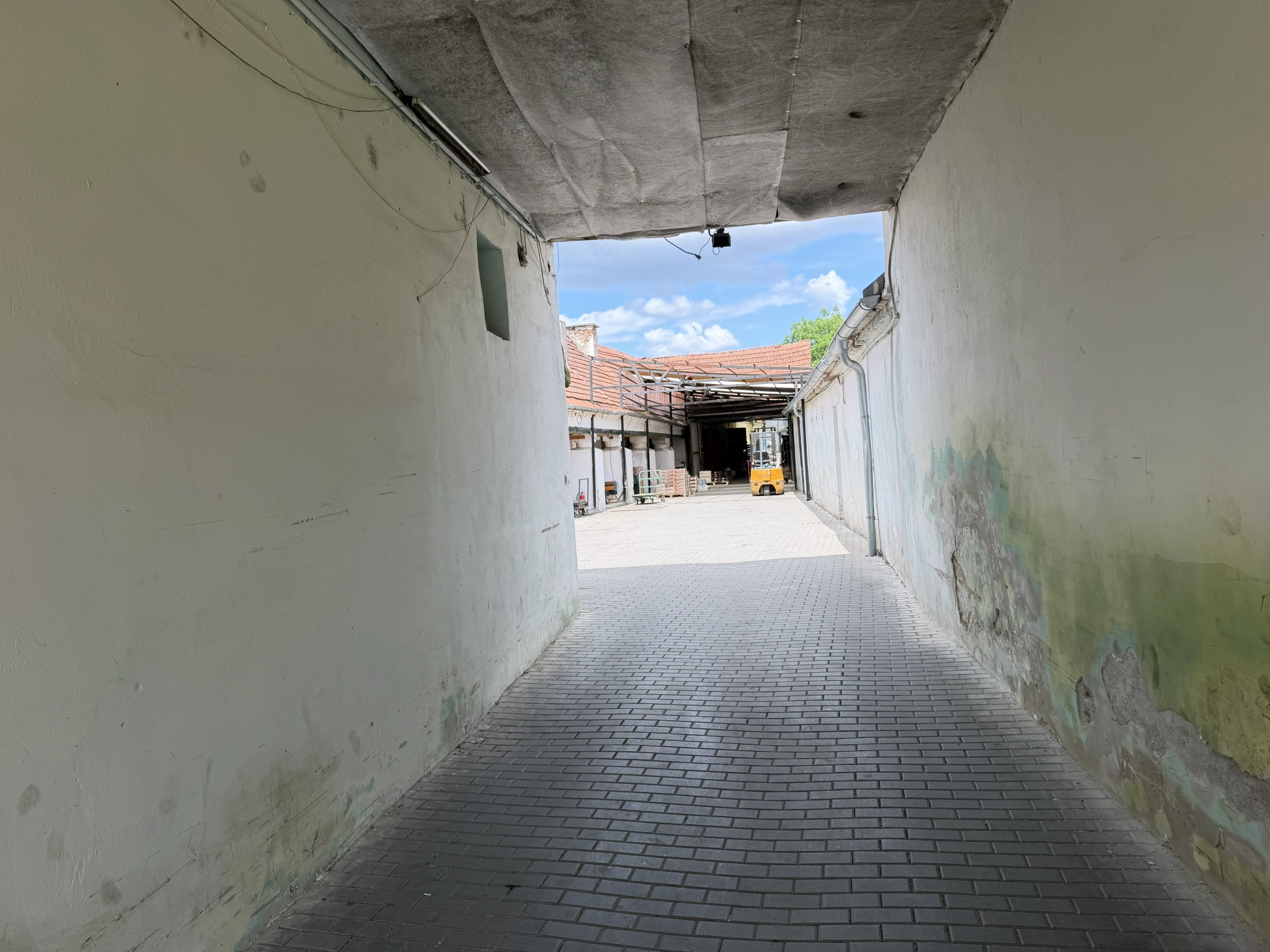
Some employees live in a dormitory, while others stay in a small apartment in the yard near the poultry plant | Photo: Voxpot
The burden would not necessarily fall only on the staffing agency, but also on the company where the worker was actually assigned — in this case, Vodňanská drůbež, part of the Agrofert holding.
“The user, meaning the company where the employee works, can be fined for violating workplace safety rules. But the employee seeks compensation from the employer — the agency,” explains lawyer Paula Filipová
According to Nevzat, the agency and Vodňanská drůbež covered the cost of transporting the woman’s body back to Bulgaria and also offered financial support to her family. He does not say how much money was involved.
“We come across cases where companies try to sweep everything under the rug — they pay victims money so they won’t speak to the investigating authorities, call it compensation, and sometimes even have them sign a nondisclosure agreement,” says Eva Malá, an analyst and labour-law expert at People in Need, where she works on labour exploitation.
“If it involves a foreign worker, they may move them to another workplace, or advise them to go back home to their country, or else they will have problems,” she adds.
As a result, many such cases never make it into the statistics at all. If the employer does not acknowledge the incident as a workplace injury, the worker is left to pursue the matter in court. That is often a serious obstacle for victims — especially when they are no longer alive.
“In the case of a foreign worker who has died, there is usually no one left to claim compensation on their behalf. The employer can simply deny that it was a workplace injury and face no consequences,” says SIMI’s legal department.
Challenging an employer’s decision can be difficult even in less serious cases. The claimant must pay court fees and legal costs, and also runs the risk that if they fail to prove the incident was a workplace injury, they will be ordered to cover the other side’s expenses as well.
All of this comes at a time when the worker may be unable to work, or may already have lost their job.
Bulgarian Workers as Cleaning Ladies
The difficulty of proving workplace injuries — including fatal ones — works in favour of companies that rely on agency workers, often pushing the limits of what occupational health and safety rules would allow.
“Foreign workers are more willing to take risks. They want to earn money, so they work more,” Rudolf Hahn, then the chief labour inspector, told Hospodářské noviny, summing up the mindset of many workers. Companies know this and take advantage of it.
In this context, the decision in Modřice to describe the death as “an unfortunate incident, a rash decision, and a gross violation of safety rules” takes on a different meaning.
The agency’s claim that Vodňanská drůbež had a separate company handling window washing also clashes with the accounts of some of the women Voxpot spoke to. According to them, the poultry plant only started using an outside window-cleaning firm after the incident.
“Until then, it was done by the cleaners, who are usually Bulgarian women working in the poultry plant,” says a woman who has worked at the facility for years, standing by the gate.
An advert posted about three months later seems to confirm that. In the summer, quality manager Pavla Moresová wrote on a job board that the Modřice plant of Vodňanská drůbež was looking for a company to handle regular window cleaning. “We are seeking a company for regular window cleaning across the entire premises of our company, at a frequency of approximately once a year,” she wrote. Voxpot contacted her to ask whether the cleaners had handled the task before. No answer had arrived by the deadline.
SIMI also says it is highly unlikely that the woman would have chosen, on her own initiative and before the start of her shift, to wash windows at the workplace when she had never done such work for the employer before.
“Her actions were very likely the result of a direct instruction from the employer to do so,” Filipová says, adding that the regional labour inspectorate has no way of verifying whether such an order was actually given.
“The employer denies the instruction, and employees who depend on their jobs confirm the employer’s version of events,” she continues.
The staffing agency rejects that account. “After all, Suzana also signed papers explaining the safety rules in Bulgarian,” Oxana argues, with Nevzat nodding in agreement.
Their words are again reflected in the materials submitted to the inspectorate by the agency. According to those documents, Suzana should have undergone an induction training session at the workplace on her third day on the job in August 2024, with an interpreter present.
But according to Viktor Rumpík of Diakonie Plzeň, an expert on the employment of foreign workers, such trainings are often little more than a formality.
“Our clients often sign a number of documents without even reading them or understanding them. Some don’t even get a chance to look at the occupational health and safety rules because they are never shown them,” he says.
An Interpreter from the Sausage Section
The staffing agency insists that the young woman had been properly trained and knew that washing windows was forbidden. Two days before the tragedy, Suzana was supposed to have attended a coordination meeting with several other Bulgarian women, at which a representative from the plant explained exactly what the cleaning work was supposed to include.
Also present, according to the agency’s account, was a local Bulgarian agency employee, Martin Lazarov, who translated the instructions into Bulgarian. The documents submitted to the inspectorate describe him as a “translator employed by the inspected party,” but Voxpot found that he was not a trained professional interpreter.
“He’s not an interpreter — he works in the sausage section. He just speaks both Bulgarian and Czech, and translates for his countrymen when needed,” Oxana told us. The newsroom was unable to reach Lazarov himself.
Richard Kolibač, spokesman for the labour inspectorate, told Voxpot that Czech law does not set any formal requirements for an interpreter, and that an employee who speaks the relevant languages can serve in that role.
“Proving afterwards that the interpreter failed is very difficult,” he admits.
The agency, Intervacantion, therefore offers no real explanation for the tragedy. “She decided to do it herself. It probably all led up to that. It was probably her fate — simply fate,” Oxana repeats.
The agency’s responsible representative, Stanislava Buťová, also says she cannot explain the young woman’s death. “It was some kind of rash, impulsive act,” she repeats, referring to the labour inspectorate’s findings.
SIMI’s legal team, however, argues that the case was not properly investigated and that the employee’s actions were very likely linked to a direct instruction from her employer to wash the windows.
“The workplace is equipped with security cameras, and they could have documented operations even before the accident occurred — whether and when the employer arranged for window washing for the user company, and whether this was standard practice,” SIMI says in its statement.
Labour inspectorate spokesman Richard Kolibač confirms that inspectors did not see records of earlier practice at the poultry plant, but they did ask local workers, who confirmed that window washing had been prohibited.
“The investigation did not prove any breach of safety regulations. Both in-house and external employees are always thoroughly trained, and we insist on compliance with safety rules and then monitor it,” says Agrofert spokesman for Voxpot.
Intervacantion did not respond to questions sent to the company’s mail box. The police refused to comment on the case.
Missing Statistics
Although the State Labour Inspection Office reports a long-term decline in the overall number of workplace injuries, the number of injuries among foreign workers has been rising steadily and has more than doubled since 2013.
The share of fatal injuries among foreigners has remained roughly unchanged. In 2024, one in every five fatal workplace injuries involved a foreign worker.
“Foreign workers’ share of fatal accidents is twice as high as their share of the labour market,” Rudolf Hahn said in Hospodářské noviny. He explained that the main reasons are that foreigners are more likely to work in more dangerous fields, while communication barriers and exploitation also play a role.
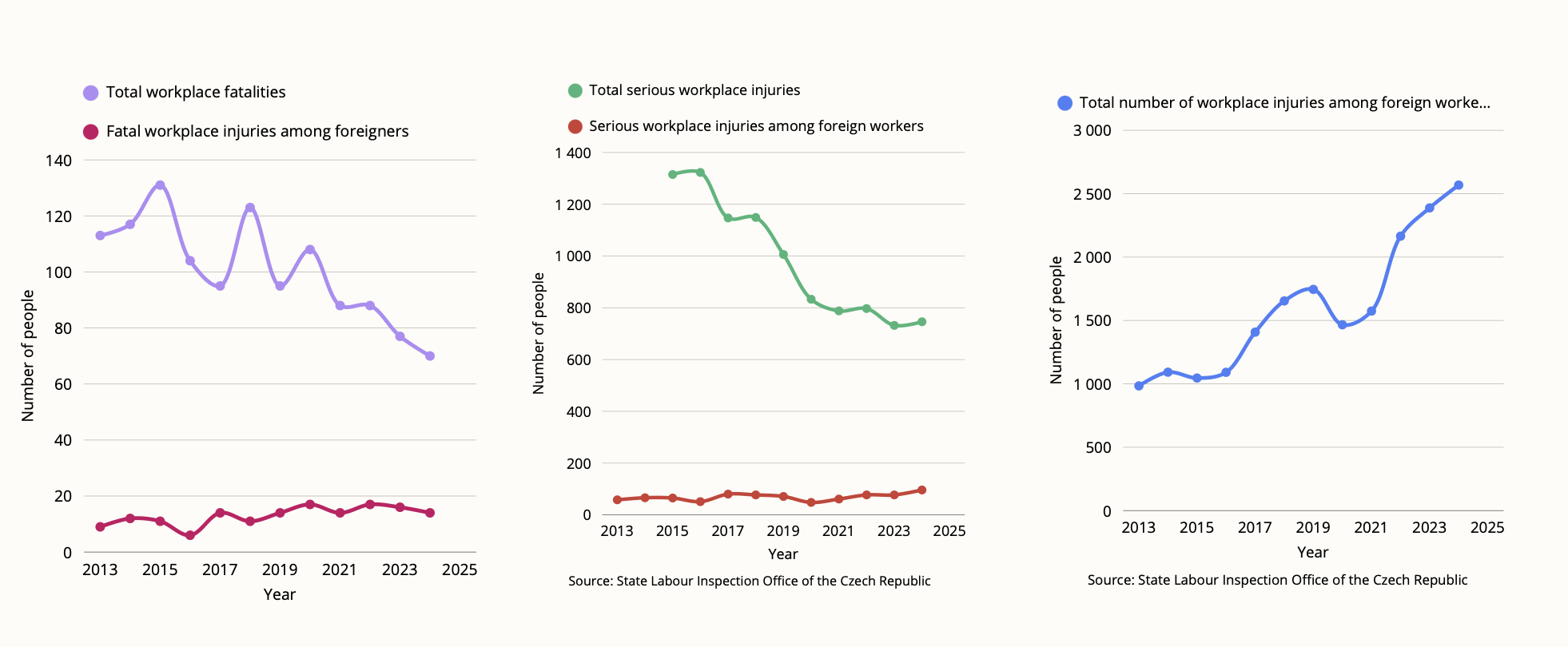
Zdroj: Voxpot
According to Magda Faltová, director of SIMI, a significant share of workplace injuries involving agency workers and foreign-born employees never makes it into official statistics at all. Suzana’s case will not appear in last year’s figures either.
“We often meet clients who come to us with an entirely different problem, and only incidentally do we learn that they suffered a workplace injury,” Faltová says. At other times, the news comes from family members who arrive saying they need to take care of someone, only for it to emerge that the person was injured at work.
“In most cases, though, the employer or the agency has already covered it up. People often are unable to prove anything. Before they take an injured worker to the hospital, they tell them: ‘You must not say it happened at work,’” she says.
Since taking office, Andrej Babiš has repeatedly stressed the need to crack down on agency work by foreign employees. Yet the company he built himself — and to which he still maintains close ties — relies heavily on cheap agency labour from abroad.
“About 80 percent of the workers here are foreigners,” says a foreman heading into the Modřice poultry plant, nodding toward the facility. He is one of the few Czech-speaking employees the Voxpot team encountered there.
“They only need a few months and they learn Czech,” he says when asked how he communicates with the workers under his supervision. He does not speak any other languages himself. “I don’t need to,” he says.
The difference between workers is not just a matter of language skills. Journalist Saša Uhlová, who worked undercover at another Vodňanská drůbež facility a few years ago, recalls that agency workers there were sometimes on the job for sixteen hours a day.
Suzana’s story was never meant to reach Czech statistics or the media. That is precisely why it so clearly captures how the agency-work system functions when something goes wrong: responsibility disappears, and what remains for the dead are grieving families, bureaucratic phrases, and silence.